
It’s a funny thing, money. Sometimes I’ve had it, sometimes I haven’t. One thing I’m really glad to have learnt early on is that when I’ve had absolutely tons of it, though it has provided ‘stuff’, it hasn’t correlated with my deep happiness/contentment with life. And sure I love to spend it, sure. For reals. Comfort shopping and splashing it now and then, sure. Who doesn’t like buying treats when they can, eh?
 I appreciate if you’re struggling you’ll want to get hold of some cash to remove that huge stressor of worry about food and housing; we all need the basics in place; absolutely. Zero shame on anyone who’s not doing too well with cash; that’s me fairly regularly too ~ and will likely be the majority of the people reading this blog. But I do think we can go too far the other way, and have our lives ruled by money; those who’ve done that always seem to be on a bit of a journey; and a bit of a crap one at that.
If you don’t know anyone who’s long-term rich, I can see that logic would suggest ‘some money’ = ‘stability & happiness’ … and therefore surely ‘lots more money’ = ‘lots more stability & happiness’, but honestly 100% of the most teeth-grindingly miserable of my extensive collection of relatives are the richest. Sure we all know examples of ‘happy’ rich people; but beware appearances, everyone likes to present a certain mask. Especially online, and especially the nouveau riche. Dig beneath the skin of the long-term super-monied and [in my experience], you will always find serious dysfunction, loneliness and misery, plus the mask required to hide it.
Which is partly why I’ve always turned down the offers I get of Patreon support or payment for my comics; nothing wrong with earning money, but I have enough. Unlike the clutching, hoarding millionaires, I have learnt to be content with what I have. Chinese takeaways are still a treat. My phone is relatively crap but you know what … I can still use it to message people; remember that was the point of those things? Exactly. And I work sort of hard-ish a few days a week, and make the money I need to, which means I can live life all the rest of the time! Yay! That’s the way it should be, I think. That’s what I’ve been aiming for, anyway; nothing to prove.

Plato argued that the richest should own no more property than four times that of the poorest. Pretty brutal, sounds good to me. It’s a bit of a shame when you see how money-obsessed or work-obsessed people can get, and then you realise the pressures on them from a million directions; let’s face it the whole late-capitalism thing’s flipping awful, really.
Grievance politics fuelled by tossers. Lives lost to the mill of … what? People trapped in subscription agreements with bugger-all to do and zero time to do it in. Multiple jobs, ‘hustle’ culture, scant few vacation days traded like precious little ‘extras’. All the enrichment of a battery chicken. Makes me very sad, what our global inability to tax the rich and properly distribute resources has done to us as a species. Especially recently, when Fascism is growing like the predictable infected puss-filled polyp on the neck of the profiteer.
I do realise I’m also incredibly privileged; to live among countries with work ethics, where I get free education and healthcare, free basics, cheap travel, my income is taxed mostly at 20%, and most importantly easy access to an incredible selection of sixteenth-century pubs! I can walk out of my busy little home and enjoy ten different genres of live music, foods from around the world, friendships with people of completely random ages and sexualities and religious beliefs. The more I think about it, the more I realise how lucky I am to be able to do any of that.
But perhaps things are changing, perhaps people want something more for their lives than mere survival. Comparison. Appearances.
Here’s a nice example from Japan, where the megacity of Tokyo is perhaps beginning to lose its appeal: https://www.ft.com/content/329ce4f5-cc41-4cfe-8248-136df12936ba . Or the large-scale movements predicted in China: https://www.economist.com/china/2026/01/26/china-fears-a-flood-of-unemployed-workers-in-rural-areas [EDIT: those links might be paywalled depending on your location: I could read them fine and don’t subscribe to either] [I’m too tight to subscribe to anything ever! lol]
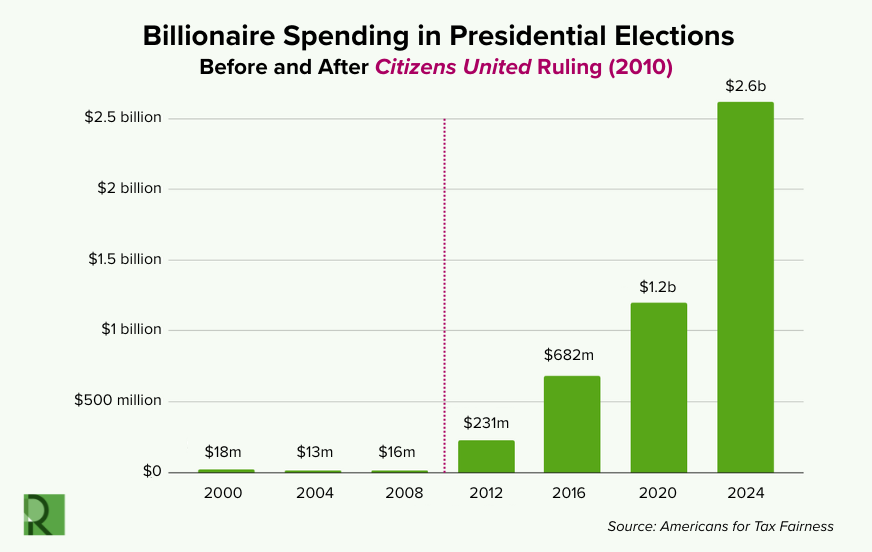 There are enough resources on the planet, if only we could learn to be content. And if we could do that, perhaps we would all be free to be whoever we are? Free to laugh and cavort with whomsoever we choose, without being labelled and killed. That’d be nice. And perhaps in order to achieve that, we simply need to reject the bullshit capitalist media circus perpetrated by billionaires and … as I always like to conclude … eat the rich. I am not advocating for cannibalism, but for Limitarianism. It’s where my thinking has been for many years.

There is good news. Recent fiascos abroad (ahem Elon ahem) have pushed agendas that have been on the back-burner for too long. Australia is already moving to seriously limit political donations across the board. There’ve been similar rumblings from other parliaments too; we had this happen shortly after Ukraine was invaded, the people of Norway who had been umming and ahhing about joining Nato for decades suddenly waking up and saying “Um yep, maybe it’s a good idea. Fuck Putin” ~ radical situations galvanise radical movements.
Don’t take this as a justification for the despicable voting that has happened in America, but looking for the light; perhaps this polyp, this rectum, this fetid Faustian stack they call ‘The Orange One’ is what it will take for cultures to begin to actually change laws relating to the vast and grotesque hoarding of wealth.
We can hope.
And in the meantime …

I am pretty sure I just an article somewhere about Meta doing something shady, via their social platforms making them earn billions of dollars.
https://www.reuters.com/investigations/meta-is-earning-fortune-deluge-fraudulent-ads-documents-show-2025-11-06/
Yeah, I think if you look for articles of “Meta doing something shady”, you will be inundated with investigations, court records and articles throughout their history since the dawn of the Facebook age; part of them splitting off into the Meta corporate move, was exactly to shift some legal and tax burdens into other areas; all shady. Them being sued by the EU, them avoiding tax or harvesting medical records or causing ACTUAL GENOCIDE in Myanmar or … yeah. The list is long and meaty. That barely-animated column of uncooked pork is on my naughty list, for sure.
Quite the whimsical thought I just had.
It just triggered something in me and I needed to post it.
I have never much use for money, however I do appreciate the safety money can provide. As long as I have enough, to get through a month without a worry of missing any payments that needs to be paid.
And have a little saved up for the rainy-days, if shit should hit the fan.
However, I am currently standing in a situation, where every cent counts and it is still not enough to get me through the month without sacrificing something (skipping a meal or two, usually), just to have enough money pay so that I can have a warm home.
Damn, Shades I’m really sorry to read this. Life has its seasons but that doesn’t help us get through them when we’re literally hungry and/or cold. Feel free to share a GoFundMe or Ko-fi link and I’ll blog it up for those with spare cash.
That is kind of you, but I’ll be alright.
Honestly, it’ll probably make my situation worse, if I received such aid.
There’d be whole legal-system I’d need to deal with and that, is not something have the energy to deal with currently.
Yay, for burn-outs!
My situation, just gives me a kind reminder that being frugal has its benefits, when you have money to spend.
I’m sorry, chief. Burnouts suck. Be gentle with yourself when the opportunity arises, and yeah every day’s a school day when it comes to the crap we go through 👍
For too many who don’t really know who they are, the consumer and conspicuous-consumption life is a dead end. It will bring them no happiness and even less contentment. But more and more, not less and better, is what seems to make the world go ’round and most have succumbed to its illusion. Count yourself lucky if you have been able to avoid it.
Oh God, the rich irony that the FT and Economist articles you linked are paywalled! Only to be seen by those with the means to buy access. Me luvs the wringing of the handzes.
More to the point, Capitalism has repeatedly been shown to inarguably be the best way to distribute resources. Unfortunately, unregulated Capitalism inevitably creates gross inequality, even tyranny. Where is the balance to be found? Communism suffers from centralized planning weaknesses and fallacies. Socialism has trouble balancing the common good against ensuring the resources necessary to sustain that common good.
The answer is regulated Capitalism. But regulated how, and why? First, billionaires and trillionaires do not have a “right to exist”. No, they must repeatedly EARN IT, which means heavy taxation should matter nothing to them. The same applies to hereditary wealth: Grow it or lose it. Wealth should not be bricks stacked ever upward, but a sandcastle that must continually be rebuilt as the tides come and go, ebb and flow.
I’m a permanent member of the “Yang Gang”, in total favor of a UBI in the US, especially given the rampant advance of AI and a looming upending of the economy, the likes of which have not been seen since the Industrial Revolution.
I’m doing OK, despite COVID ruining my mental health and abruptly ending my engineering career at least 5 years before I was planning to retire. Because I saved like a bastard all along the way, for 40 years, and managed to accumulate a sufficient nest egg, even if Social Security fades away. I’m not rich, but I’m OK. I’ll make it, with enough left at the end to pay for my cremation.
But few in the generations following me will be able to do the same. I’m a Boomer, and the Boomers sucked the oxygen out of the room, so to speak. No generation before or since has had a more even distribution of assets, or created more wealth, while also creating the seeds for the very inequalities burdening those coming after.
Still, I spend money like the working-class kid I was during my formative years. Our family ascended into the upper class (Thanks, Dad!), but that only meant we bought our clothes at higher-end sales. We never paid full-price! It was a point of pride for us, and still is for me today. I have lots of toys, but I chiseled the cost down to the absolute minimum. I’ve owned only two new cars in my life, both of which I loved, but not much more than the dozen clunkers I’ve owned and maintained along the way.
Wealth is “objective” only if you’re keeping score. However, it’s totally subjective once you realize that “enough is enough”, and “more is not more”. We need to get the “sufficiency mindset” to become the norm, and to moderate capitalism accordingly.
One more thing. The world needs more boobs. Those who help make that happen deserve Their Best Life.
Uahh! That’s so funny they were paywalled! I don’t subscribe to them (I never subscribe to anything) and they weren’t paywalled for me though now they are (I use a VPN) so maybe it paywalls depending on your location.
And yeah the rest of your stuff I agree with – that’s a shame there’s no UBI in America, there’s a sort of ish one in the UK and lots of talk of testing a proper one, but the best one I’ve heard of recently is the proper UBI that artists and musicians get in Ireland! That’s incredible, and after the test runs it seems to be making it into law! So good.
Yeah the sufficiency mindset is good, but it can only operate once the bellends who hoard everything have proper boundaries in place.
Your heart seems to be in the right place, but I think you might need to familiarize yourself more with the discipline of economics, or at least expose yourself to the work of people who hold opposite views to yours. Perhaps something like Basic Economics by Thomas Sowell or Enlightenment Now by Steven Pinker (both extremely readable; the latter is about happiness and progress).
Absolute Wealth and Relative Wealth are different beasts, and it seems that people will be unhappy because of wealth disparity (relative wealth), no matter how high their absolute wealth rises; they might own a moon, or a moon-moon, but be unhappy because their neighbor owns more than 4 times the moon-moons; and we all know there’s nothing worse than triple Hitler than quadruple moon-moons. Julius Caesar once said that he’d rather be first in a village than second in Rome. In other words, he chose relative wealth over absolute wealth. Today, the average Jane has better access to higher quality and variety of food, travel, health, TV, Internet, A/C, sex (if they’re a brothel-goer), 3D nsfw comics, and so on. And yet, Julius would rather be an emperor. Same with any dictator, of whom you mentioned some: they’d rather rule over shithole countries (of their own making) than be anonymous citizens of great countries. Why do I say all this? Because, it seems to me, you might be making the same mistake: you might be choosing equality among cave dwellers over great wealth discrepancy among modern homos (sapiens). I know in your mind you’re aiming for some golden mean, not the extreme “false-dichotomy” I might seem to be peddling. But maybe that golden mean exists only in your head, rather than in reality, at least as far as some economists are concerned.
Hmm, okay I’m interested that you reference Enlightenment Now because I found that book total crap. I tried to find a short way to sum up my feelings about it and noticed that Bill Gates loves it (big surprise … ahem … kinda makes my point thanks), and this review about sums my feelings up: https://www.goodreads.com/review/show/2295958591
Regarding your points about Julius Caesar, um yeah if anything you’re agreeing with me there (the miserable, arrogant, entitled piece of shit emperor is … miserable, arrogant, entitled … and gets murdered by his best ‘mate’. Makes my point nicely, thanks.) so perhaps I’ve missed the point you’re actually making.
Are you saying unnecessary suffering and/or wealth inequality doesn’t exist because we have broadly made progress? Surely not. Or perhaps you’re saying progress cannot include the next steps that I’m on about; ie. basic boundaries for those who are wrecking the environment/societies in their profoundly ill-minded hoarding? Or perhaps you’re saying I want to live amongst cave-dwellers and everyone have nothing? Maybe I didn’t make my own points very clearly. Hmm
The review you linked to, if it didn’t include the part where the reader admits that he didn’t read all of the book, my guess would be that he had read none of it.
I acknowledge that there is suffering and poverty. But the best system we know of that alleviates them the most is the kind described in Enlightenment Now: liberal capitalist democracies with Enlightenment values. Among billionaires, with the exception of Warren Buffett, Bill Gates has done the most to alleviate poverty and improve global health, which explains why he endorses the book so whole-heartedly.
You see, this is why I feel confused. On the one hand, you should be raving about a book such as Enlightenment Now. It seems to be describing exactly the kind of thing you want to be happening. On the other hand, you outright reject it. Your original post has caused the same confusion in me, which is why I started my reply with “Your heart seems to be in the right place, but…”. On the one hand, you start out with self-imposed limitarianism, where each of us, individually and of his own volition, realizes that money isn’t happiness, and decides to limit his possessions to what’s enough. A kind of semi-monkish attitude. On the other hand, you proceed to suggest that this ideal should not just be freely chosen for ourselves, but also imposed on others against their will, specifically those who can be labelled as “rich” or “millionaire” and so on. So I tried to note the tension between those two approaches you take, by concentrating on the ideas of Relative Wealth and Absolute Wealth. I could have just as easily chosen “equality of opportunity” vs “equality of outcome”. I was sensing that something was wrong about your post, or how it landed with me, and tried to put it into words. Perhaps I have failed.
I used the Julius Caesar quote rather unconventionally. I used it to illustrate that Julius chose the village over Rome. Yes, he ALSO chose to be FIRST in that village. But there are other people who choose the village over Rome, and their reason is because there is less wealth inequality in the village. You can be similar to Julius in one sense and not in the other. Again, perhaps I could’ve used another anecdote. Perhaps the one about the genie who says, “I will grant you three wishes, but there’s a catch: whatever you wish for, your neighbor, your worst enemy, gets twice as much”. So the wisher spends his first two wishes wishing for riches, and his third wish is “I want you to beat me half to death”. Perhaps one could reasonably ask: why should we care about wealth inequality AT ALL? Why isn’t ABSOLUTE wealth our only concern? Can I only afford a bicycle, or can I afford a car; why should I care what another person can afford? What if, by attenuating wealth inequality, I lower my absolute wealth? It seems that there is a group of people, perhaps even half the planet’s population, who will simply not accept a rise in their income if that means an even greater rise in the income of his neighbor. I could search for a specific example of such a person, but you already gave one: Plato. If the genie appeared to Plato and told him he’ll grant him any wish but his friendly neighbor or the love of his life would get 5 times as much, Plato would be like “no, thanks; 4 times is the maximum I’ll accept”.
But my criticism depends on what you’re really trying to say, and perhaps I have misunderstood you.
The more our exchange goes on, the more I think we might actually be agreeing, just confusing each other! I liked your use of relative vs absolute wealth, and yes there is a change in culture I’m talking about there, in which we learn [as individuals] to lay down the ambitions of our youth and become atoned to our situation. Perhaps that’s too worthy an aim but it’s something I’ve been thinking about for my own life, the importance of contentment in the present moment, rather than seeking often more shallow ideals of happiness.
My use of the Plato example was probably like your Caesar example; an analogy that could be read in very different ways and was likely misunderstood. And yeah I disliked the book mostly because of the ‘stop whining you’re not that poor, everything’s great’ tone that came across to me. Looking again at those book review comments, there’s a better reference here: https://x.com/Ramanan_V/status/1030908683885064192 (and the fuller version: https://www.youtube.com/watch?v=ie7-xhxSh94). Really I think there’s a nuanced discussion in there, which says it’s both (1) yes, fantastic the progress we’ve made [I don’t have to worry about Tuberculosis, sure], AND (2) still worth sorting out the things that are absolutely broken and rob people of their lives. If someone’s not coming face-to-face with real poverty, then … lucky them, but it’s definitely a serious issue we’re prolonging for no good reason. I think my problem is I’m sensitive to people saying “everything’s fine, stop worrying about poverty” because it doesn’t honour those whose lives are utterly dominated by the cycles of poverty they are very actively trapped in; and I do come into contact with those people on a fairly regular basis, so I guess I’m kinda sensitive to it. Maybe I’ll blog about the Limitarianism thing again, try to make more sense!
I suspect the world would be a far more contented place if everyone understood the meaning of “enough”. If you don’t have enough, you need more until you have it. If you have enough, you don’t need more. I achieved a huge jump in happiness with my lot in life once I realised there wasn’t a bill that could land on my doormat that I couldn’t pay. Major stuff (car accidents, house fires etc) are covered by insurance and the rest, well, I’m lucky to be OK on those. Everyone’s definition of “enough” may vary wildly, but we all know where our own figure lies. Even Elon knows he doesn’t NEED the amount he has. If he rediscovered “enough” he might spend the rest on alleviating hunger or bringing access to clean water to everyone on the planet. Now that WOULD make him happier.